

Cleveland, Ohio, early fall of 1976, in a discotech:
A 5’9 23-year-old Italian man with an afro, wearing platform shoes, flares, and gold chains over his hairy chest, spots a long-legged, bleached-blonde bombshell sitting at a table, looking at him from across the room as he instructs a group of women on how to line dance.
What that Italian man didn’t know was that she was checking out the guy standing next to him. And even if he had known, knowing him, it wouldn’t have changed much.
The Italian man walked over to her table and asked if he could buy her a drink. The bombshell accepts: “You can get me a beer.” So the Italian man goes over to the bar to place his order. In the meantime, the man she was checking out walks over to her table. The Italian man, seeing the interaction, leaves the drinks at the bar, interrupts their conversation, and asks her if she’d like to talk outside.
Not everything adds up in this story because there are two versions of it, and the details get a little muddied because of it.
Anyway, the first version goes like this:
The man takes the woman outside and kisses her. She says, “Why did you do that?” in an annoyed tone.
He responds, “Can I have your number?”
She answers, “Look it up in the phone book.”
The 2nd version goes like this:
The man takes her outside and kisses her. She looks at him for a very long time, and then in a soft, sweet voice says, “Why did you do that?”
He asks her for her phone number, and she responds, “It’s in the phone book under Zeman.”
The first version of that story belongs to my mother, the second to my father.
I’ve heard the two versions a million times. My father’s ending makes more sense because, otherwise, how would he have found her?
There are still so many question marks.
Like, why would my mother agree to go outside with a stranger she had just met?
At what point did she say, “Hi, I’m Kathy?” Before or after the kiss?
And why did my mom tell him to get her a beer when, at the time, she didn’t like beer?
What is certain is that at 27, my mother was ending her marriage to Wayne and taking a real chance on that Italian immigrant. They tied the knot 5 months later, one week after her divorce was final.
Because I’ve been hearing that story forever, my mind just always accepted it as my parents’ story. It wasn’t until a couple of years ago that I really started to think about how daring it was.
I mean, if someone had come to me as an adult and said that, at the age of 27, they had two small children, a nice home, a husband with a good career, and they were leaving it and marrying a 23-year-old broke college student 5 months after they had met, I don’t know… I’d think, “Oh boy.”
Well, those two crazy “kids” somehow managed to stick together.
And while, like most long-lasting marriages, they’ve had their (very) questionable moments, nearly 50 years later, they’re still going strong.
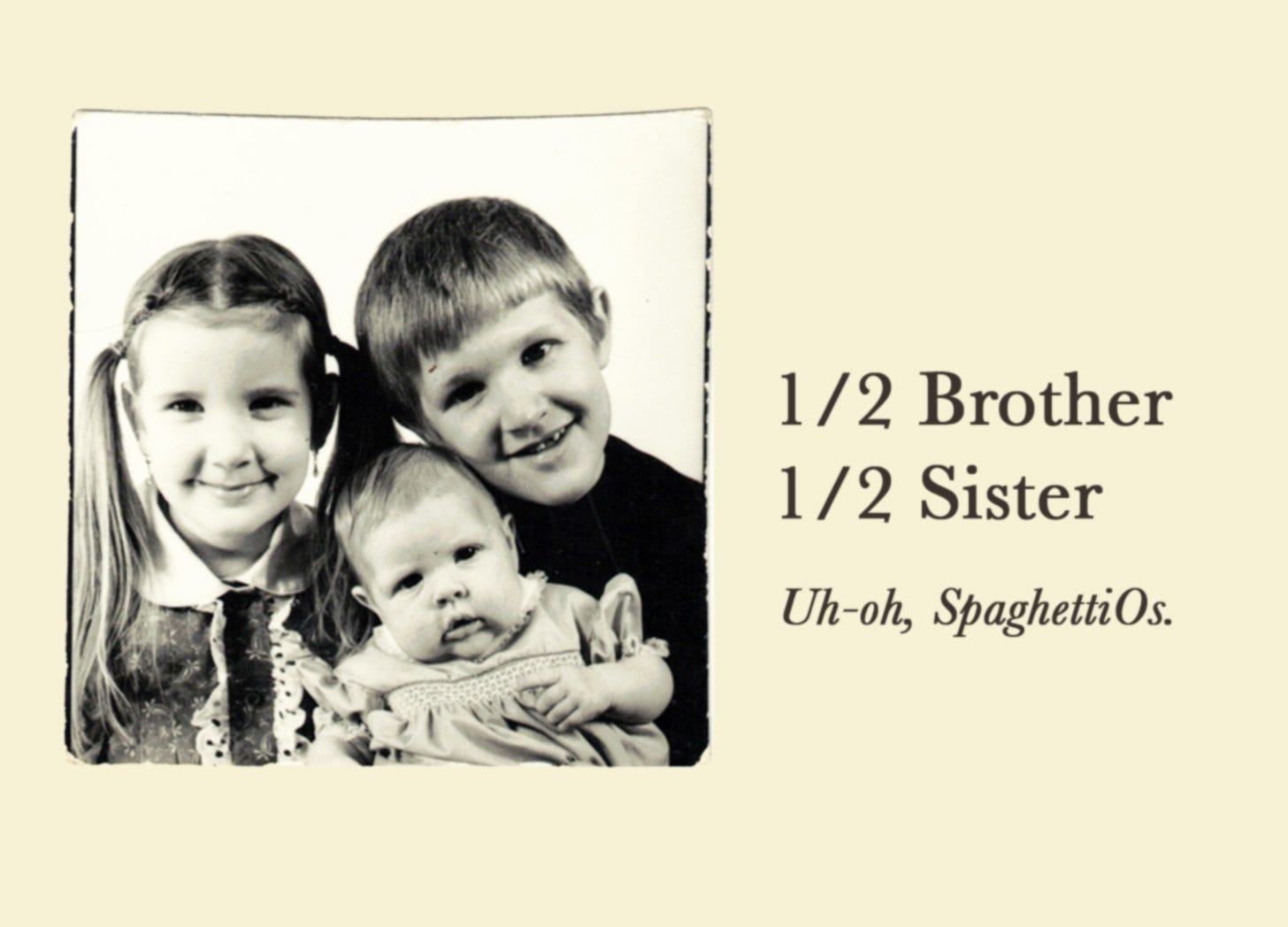
At 24, my father took on the emotional, logistical, and financial responsibility of two small kids. At the time of the wedding, my brother was 6, and my sister was 3.
Soon after, my father graduated from the Cleveland Institute of Arts and landed a job as an automotive designer at Ford. And from there, the new family of 4 moved to Michigan.
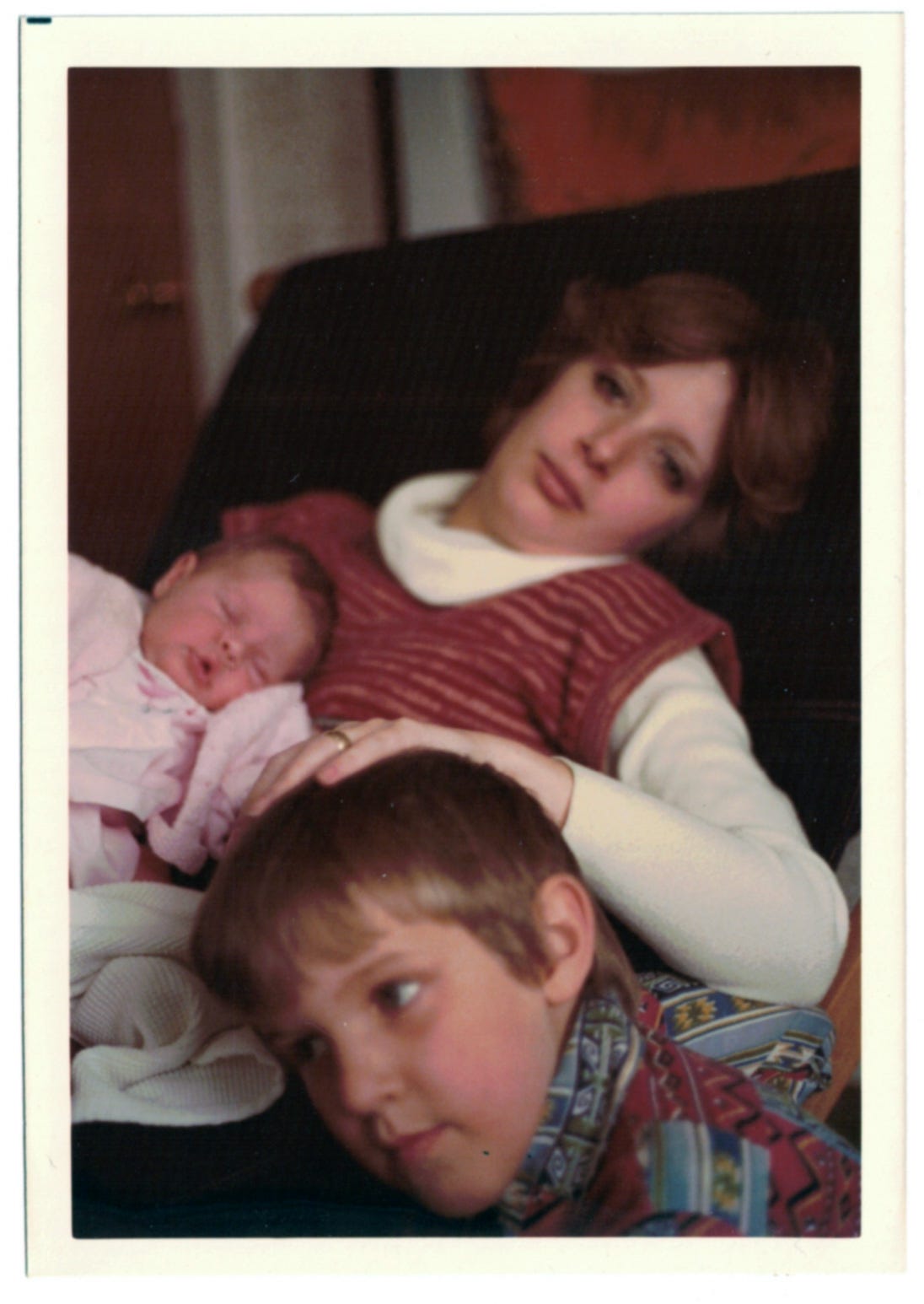
My siblings’ father opted to spend occasional weekends with them. I have only a handful of memories of them leaving to visit their dad.
My brother and sister grew up with the same rules as I did. We sat around the same dinner table, and were all disciplined the same way.
And yet, we’re completely different, pretty much in every single way imaginable.
This isn’t a story where I tell you that we don’t get along. Quite the opposite. I love my brother and sister immensely, and when we see each other, it’s like no time has passed. But as I said before, it’s like we’re from different planets.
Eat and Shut Up Methodology
Some nights could be torture for one of us, two of us, or all three of us, depending on what was on the evening’s menu. My father didn’t let us leave the table until our plates were clean, and what was on our plates wasn’t up to us.
My brother and sister hated raw tomatoes (and still do). I, for one, have always considered tomatoes one of the main reasons that life is worth living.
I hated onions, and a few other things that I’ve since changed my mind on.
When backs were turned, we’d swap onions for tomatoes. We had developed a technique: The tomato or onion would magically land on the napkin beside the plate. Then the napkin would be passed under the table to the sibling willing to eat whatever was in it.
That elaborate underground onion-and-tomato trafficking operation was a bonding experience.
My father never tolerated hearing, “I don’t like it.” In his mind, “I don’t like it” was the complaint of a spoiled child who didn’t understand what it was like to be uncertain about whether or not there would be food on the table the next day. “I don’t like it” was a lack of gratitude for being provided for.
His automatic response to that complaint has always been, “Too bad. Eat and shut up.”
We kids didn’t get it, and, truth be told, maybe we didn’t need to. Some things you don’t get to understand until you too become a grown-up.
Think about it: since when has explaining to a child that “there are starving people somewhere else on the planet” been effective in convincing a kid to eat the food on their plate?
My father has always lived by the philosophy that you don’t always need to explain why to a child. You teach a child to just do as they’re told. The why will come later.
My father grew up in a post-war home in Italy, where making ends meet was sometimes a real struggle. His own father lived through a time when there wasn’t always food on the table.
So, for my papá, it was important to drive home the lesson that you don’t take for granted the luxury of having an abundance of available food.
It’s sacred. It’s to be respected. It’s to be cherished.
So cheese doesn’t get thrown in the garbage just because it has a little mold on it. You cut it off.
You don’t put more food on your plate than you’re sure you can eat. Take less, and maybe seconds.
Don’t assume that just because you don’t like the color, it’s no good. Try it anyway.
If you have leftovers, turn them into something even better the next day.
You can apply those same rules to many things in life. And on me, it certainly worked. On my brother and sister… well, maybe a bit less.
Same house, same table, two totally different outcomes
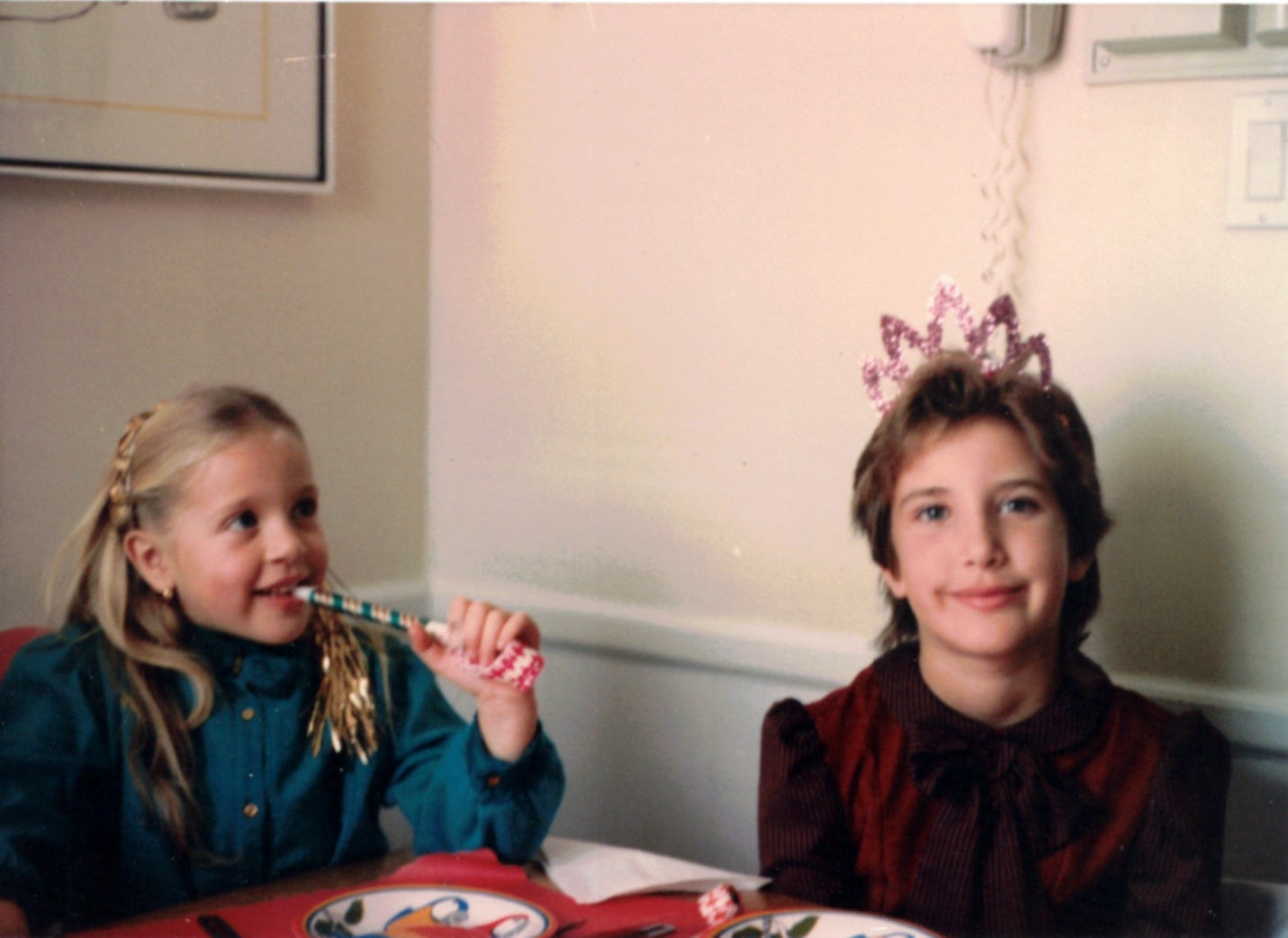
Objectively speaking, my siblings were quite young when they first came into contact with my father’s Italian philosophical ecosystem. And yet, nearly 50 years later, they remain largely unaffected by it.
I, on the other hand, haven’t been able to live without Italy. I spent the entirety of my teen years convincing my parents to let me go to college here. Needless to say, I succeeded.
In 1996, I attended the “Istituto Europeo di Design” in Turin, Italy, where I got my fashion design degree in 1999. My ex-husband Stefano and I had been together for about a year when I graduated. We had decided months prior that we’d move to Michigan right after school was over.
We got married that fall at the little wedding Chapel in a strip mall in Southfield, Michigan. By Christmas, I was dreaming up ways we could move back to Italy.
I’m not quite sure why, but Emilia and Michigan never quite jived.
I’ve been back in Italy for 15 years now, and I don’t see leaving anytime soon.
My brother and sister don’t share my sentiments on Italy and Italian culture at all.
They go to Vegas, Cancun, and on cruises. They enjoy Disney World and Cedar Point, sometimes several times within a single year.
On that specific front, we’re worlds apart, but then again, I’m worlds apart from the entire nation of Italy, for that matter.
By that, I mean, I haven’t gone on vacation in years.
When Italians head to the beach or mountains during the month of August, I’ve been known to take on absurd projects including, but not limited to:
Setting up a B&B.
Moving a 700 sq. mt. home (about 7000 sq. ft.).
Redoing my house.
Taking on a crazy amount of work with a nearly impossible deadline
All I’m saying is, for whatever reason, I’ve opted for the harder, not necessarily better, road than my siblings.
So Karen and Paul’s vacation choices are a bit foreign to my way of life, and undoubtedly more relaxing!
I am happy, though, that they’ve started visiting more frequently in recent years, about every 18 months, give or take.
While my sister Karen is here, she orders a Rum and Coke Zero starting as early as 10 a.m. If you know anything about what Italian baristas are like, you know they’re muttering something judgmental under their breath, and if they’re polite, they’ll at least try to hold back the sequential eye-roll.
I have an Italian friend named Hans (yes, you read that right, he’s not German) who does exactly the same thing. But being Italian, and being Hans, baristas know to stay in their lane. I’m pretty sure I’ve heard him growl at them before.
I don’t know what it is about a certain breed of Italian who works behind a bar, at a desk, or at a counter dealing with the public all day, but somewhere along the way they seem to develop a sense of moral authority.
I’ll never forget the time I ordered a tomato juice at 11 in the morning, and the person serving me asked if I wanted salt, and I replied that I did. He then proceeded to mutter loudly enough for me to hear (while making an annoyed hand gesture), “… at 11 in the morning. Yeah.. OK. Good luck with that”
So understand the comedy in Karen coming here on vacation and doing exactly what people are supposed to do on vacation: not working and enjoying herself.
And when she’s here with my brother, fuhgeddaboudit. It’s a marathon. Consequently, I’ve come to know bars that I wouldn’t have otherwise ever even noticed. This leads me to conclude that I should follow their example a little more.
When I moved to Italy for those two years in 1986, my siblings decided to stay with their father. My brother lasted only a year with him before showing up at the Turin airport.
It was mostly fun having my brother Paul around, but the dynamic was a lot different without my sister in the picture.
When I was little, my brother and sister would playfully beat each other up, and I was always used to help one get back at the other. It was a blast!
At 9, I was no longer the accomplice; I was the target.
Paul learned to speak Italian during that year and made friends. He’d disappear for hours on his motorcycle and drive through the hills and mountains with them. He recalls his time here with fondness, but when we moved back to the States in 1988, that was it. He didn’t return for a visit until the summer of 2023. Thankfully, he’s since visited more than once.
To this day, they both go occasionally to Italian-American restaurants. I’m not certain, but I suspect that they’ve yet to totally blacklist the Olive Garden. Admittedly, I’ll eat a slice of Little Caesars or Domino’s Pizza if it lands in front of me while visiting. But at least I draw the line at Kraft Macaroni and Cheese, Miracle Whip, and “Italian” salad dressing (maybe).
And when my sister called me from “Italy” while at Epcot in Florida and said she was enjoying a nice “Limoncello Spritz,” I looked at my mom standing in front of me, and she just shrugged and said, “Don’t look at me, you can’t take the ‘Wayne’ out of them.” But my father responded, “Why not? It’s probably really good.”
Personally, I think she should order one from one of our lovely baristas here and see how that goes.
While sharing only one biological parent explains some things, like why my sister has a retirement plan and I have enough shoes to fill a museum, it doesn’t explain why her list of foods deemed unsafe for human consumption includes...
Anchovies.
Raw tomatoes.
Most seafood.
Anything with visible organs.
Half the vegetable kingdom.
Uh-oh, SpaghettiOs.
Technically, I lived in the United States until I was 8. But our household was essentially an Italian Embassy.
During the first 8 years of my life, I fell in love with Wonder Woman, She-Ra (He-Man’s sister), Rainbow Bright, and... SpaghettiOs. Well, at least the idea of it. Those commercials showing happy kids eating “O” shaped pasta with its special sauce coming out of a can! What a novel idea!
I specifically remember asking my mom and papá if we could get some SpaghettiOs. My papá bluntly replied, “We’re not buying that crap.”
Disappointed, I archived the hope and categorized it as “someday.”
Someday finally came after we moved back from Italy in 1988. It was the summer before 5th grade began, and my parents let me stay at my childhood BFF’s house for a week. The first few days were so much fun. I got to enjoy being with all my friends from my old neighborhood, doing the things we used to do before I moved to Italy.
I called my mother to ask if I could extend my stay by a few more days, and she agreed. After I hung up the phone, I walked over to the lunch table, and what was being served?! SpaghettiOs!
I was so excited. I had waited my whole life for them, and finally, there they were, waiting for me on my plate!
I took one bite and thought, “Uh-oh. I’m going to vomit.” Surely there had been some mistake. Maybe this particular can had gone bad.
I could not fathom how millions of people were voluntarily eating this.
The memory of its flavor still traumatizes my taste buds.
Within 30 minutes, I broke out into a fever, feeling violently ill. So after lunch, I called my mom and asked her to come get me.
The minute she arrived and kissed my forehead, I began to feel better.
I was safe. No more SpaghettiOs. Civilization and decency had been restored.
During the 30-minute drive home, my hunger returned, and my request for dinner was, “Real spaghetti with tomato sauce.”
The same simple sauce that appeared on our table countless times growing up, and the one I still make today.
Basic Italian “Pasta al Pomodoro”
Serves about 4-5 people
About 2-3 tablespoons of extra virgin olive oil + 2-3 tablespoons (or more) for final garnish
1 fresh garlic clove
1 can of stewed tomatoes (15 oz. whole or diced)
3-4 fresh basil leaves
Salt and pepper to taste
100 grams (3.5 oz.) of dry pasta per person (this is traditionally the serving size in Italy)
Place a large pot of water on the stove for your pasta (approx. 1 liter, or 34 oz., per serving). Once you get that going, you can start your sauce (This may sound obvious, but the pasta goes in after the water starts boiling).
In a saucepan, pour in enough olive oil to coat the bottom.
Crush the garlic clove or chop it up. This comes down to a question of preference. Some people sauté the clove and remove it at the end, or just chop it up and leave it. Personally, I alternate between the two options, but if I choose to leave the clove whole, I eat it before anyone else tries to steal it.
Remove the saucepan from the flame once the garlic is cooked, and let the oil cool for a few seconds; otherwise, if you dump your tomatoes into the oil when it’s too hot, everything will splatter everywhere. If my laundry room could talk, it would tell some dramatic stories.
Once the tomatoes come to a simmer, turn the heat down so they don’t boil. Boiling isn’t necessarily bad; it’s splattering we’re trying to avoid.
If you opt for whole stewed tomatoes, break them up with your spoon so the chunks aren’t too big. Add your salt. Don’t overdo it until you’ve cooked your pasta. Sometimes the water is too salty, so give yourself some grace to adjust the final outcome accordingly.
Simmer your sauce for about another 10-15 minutes, stirring occasionally. You don’t want to overcook your sauce; the tomatoes should taste fresh, just not uncooked.
If your sauce is slightly tart, you can add a pinch of baking soda, and I mean it, just a pinch. More than that, you can taste… well, baking soda. Anyway, baking soda is great because it naturally removes just enough of that acidity without altering the intended flavor.
Some people advise using sugar or milk. I’ve done both; it does change the food's flavor in a way that isn’t always ideal, and it doesn’t always eliminate the acidity effectively. From experience, the safest option is just that tidbit of baking soda.
Add the fresh basil leaves (whole) in the last minute or two. You don’t want to overcook them; you’ll kill the flavor. In a pinch, people will add dry basil. It tastes nothing like the fresh; it’s not nearly as good, but if you really have no other option, then go for it.
Once the water starts to boil, dump a couple of handfuls of large rock salt into it. Fine salt is fine if you don’t have rock salt. Whether you should add it before or after the water boils is a huge ongoing topic of debate.
I choose to do it after the water boils because, in theory, it’s supposed to keep the salt from corroding your pans.
You can tell if the water has the right amount of salt by tasting to see if it tastes like soup. If it tastes like soup, then it’s perfect.
If you’re making spaghetti, don’t snap it in half. It’s considered a sin.
Boil the pasta until it is “al dente” (to the tooth). I’ll explain in the next chapter the implications of cooking your pasta beyond that state.
Do not rinse the pasta. That’s another sin.
Mix it all together in a large bowl with the last couple of tablespoons of raw olive oil at the end. Place your servings into individual bowls that people can opt to top with grated Parmigiano Reggiano (not Kraft Parmesan cheese; it’s basically sawdust in a green can).
That’s it. No adding tomato paste, no cooking it for 36 hours, or whatever urban myth you may have heard that was passed down by someone’s grandmother.
Nothing more, nothing less. So the next time you want fast food, there you go. Now eat and shut up.
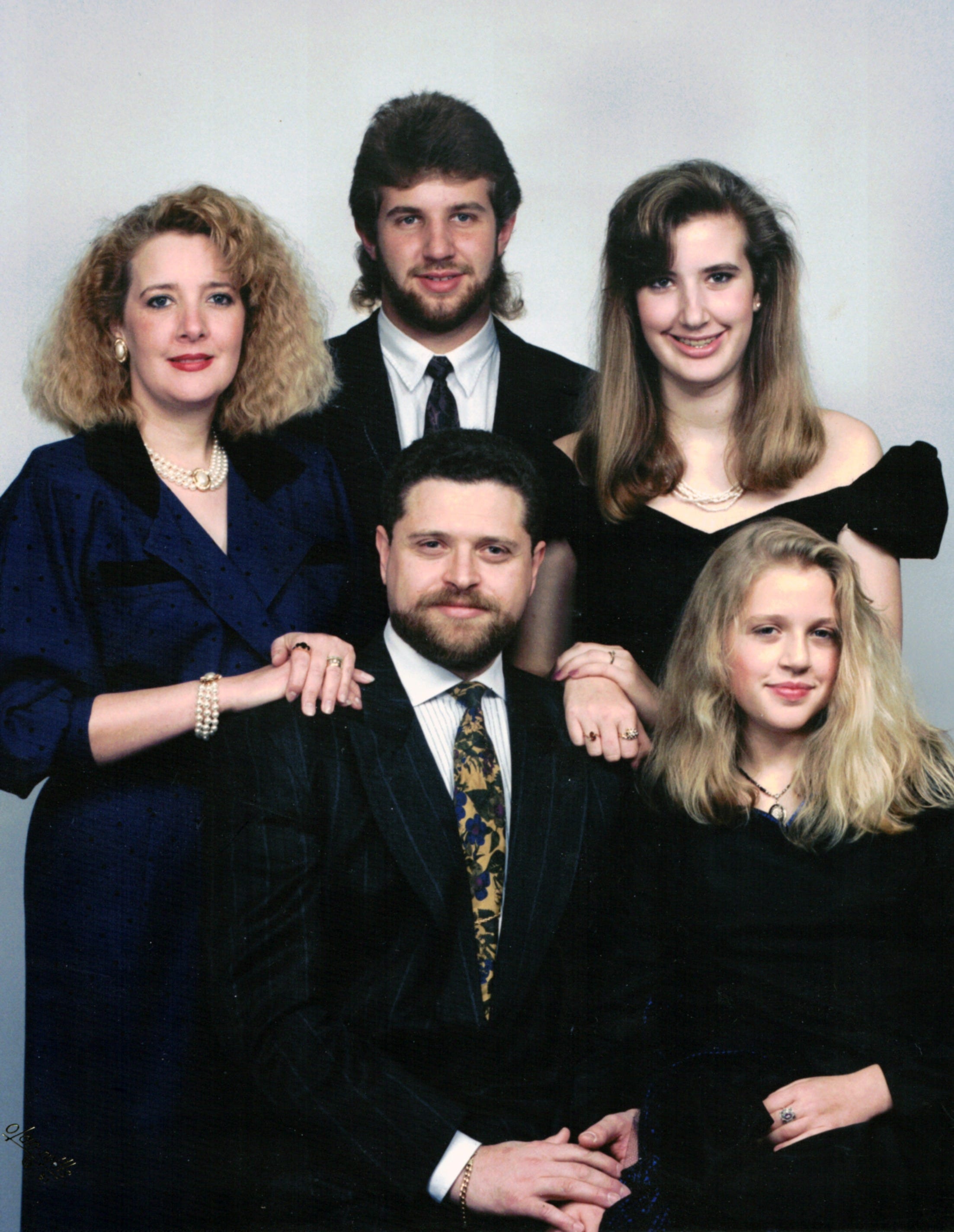
Thanks for the recipe! And the memory lane photos. As a fellow Ameritalian, I have to say that I’m on board with the Kraft Mac and Cheese and Miracle Whip! Although I won’t set foot in an Olive Garden…
And I’ll go bar hopping with your sister in Italy anytime!!
Now go eat and shut up.