

Before you dive in…
This is a long-form story — the real, unfiltered version. It’s best read with a coffee, a glass of wine, or while hiding from your responsibilities.
It’s broken into mini-chapters so you can read it in pieces, come back to it later, or get lost in it all at once.
Here’s what’s inside:
– The Cinematic Punch (the photo, the chaos, the true opening scene)
– The Neurodivergent Root System (where this whole saga really begins)
– Three Elenas (and only one of them was quiet)
– The Clueless Pediatrician
– The Diagnosis I’d Never Heard Of
– The Castle Years in Italy
– Why Bilingual ND Kids Learn Differently
– What I Actually Did Right
– What Society Still Gets Wrong
– And how it all turned out
Settle in.
This one’s a ride.
The Cinematic Punch
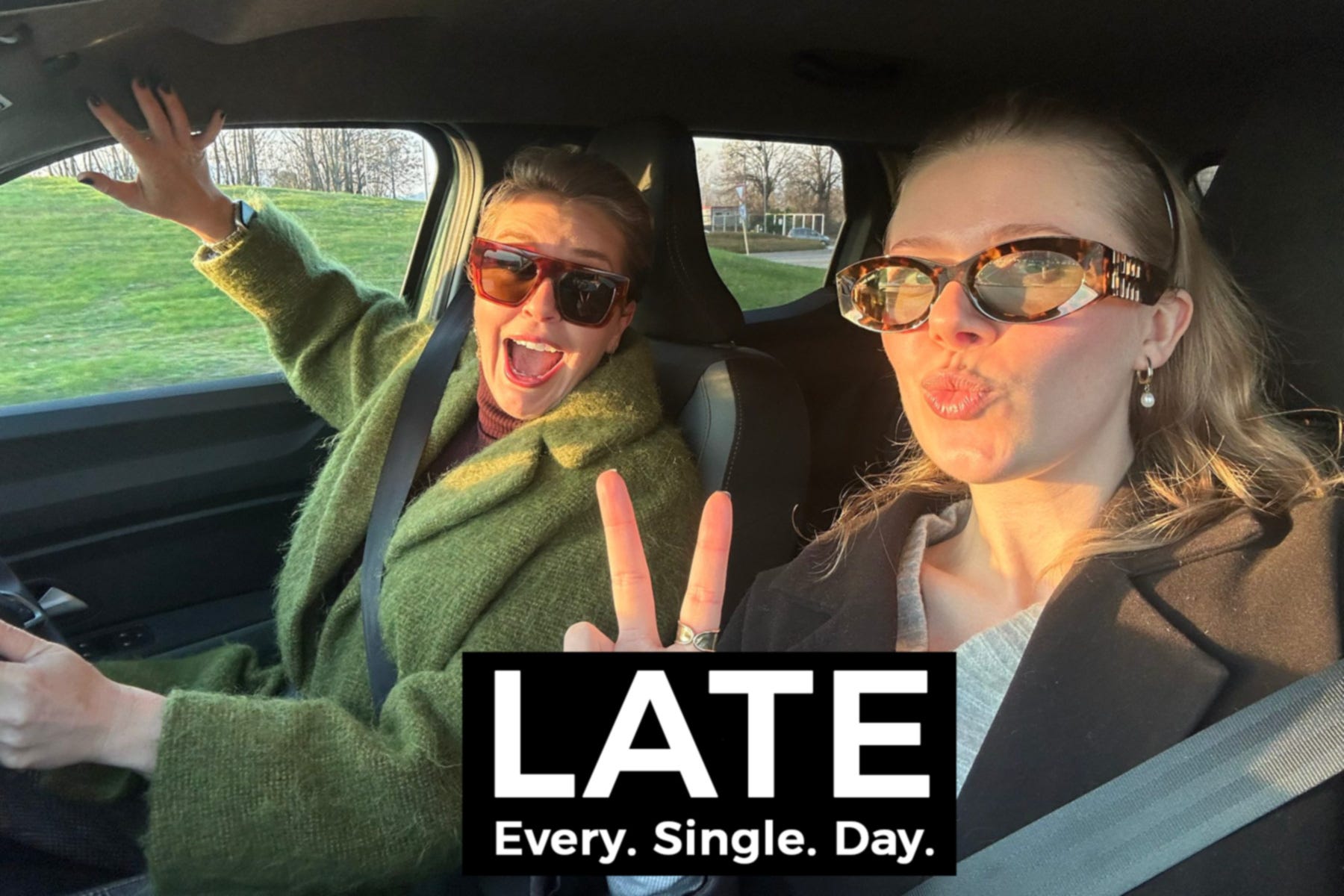
There’s a picture of me and Elena in the car — late, again — and honestly, it tells you everything you need to know about raising a bilingual, neurodivergent child while being neurodivergent yourself. A freelancer single mom in a country where it’s just the two of you, figuring everything out from scratch.
Two brains. Two languages. Zero predictability (or practicality, for that matter). And absolutely no one in that vehicle knowing what day of the week it is or what time we were supposed to be at school.
I can’t tell you how many times I sped down narrow Italian streets with Elena’s backpack — heavier than she was — bouncing in the back seat while I chased a bus full of her classmates on their way to a field trip they definitely weren’t expecting us to catch.
People love to say bilingualism is a “gift.”
Sure. Bilingualism, biculturalism — by God, nothing in our life has ever been easy, let alone free.
If by “gift” you mean a ten-year treasure hunt with no map, no clues, and a screaming GPS pronouncing Italian street names with a thick American accent while repeatedly announcing “Recalculating route…” like it personally disapproves of your life choices.
Welcome to our life.
The Neurodivergent Root System
If you look at my family tree, the signs were all there. Neurodivergence isn’t a branch — it’s the trunk.
It starts with my father, the undisputed king of ADHD. I have suspicions about my mother, too, but she’s foggier to decode.
Papá, though… he’s a masterpiece. A brilliant designer, wildly talented, endlessly creative — and yet if you hand him literally anything — a pen, a brochure, a freshly made sandwich — it immediately disappears into another dimension.
He’s also powerfully bombastic, using in moments of tension what he calls his “opera voice,” borderline OCD (our walls were always resurfaced smoother than marble), and now enjoys retirement by yelling at podcasters on YouTube for their poor English grammar and lack of logical reasoning.
And his sense of direction? Forgheddaboutit. If he says something is “half an hour away,” pack snacks and survival gear. When I was seven, he came to pick up my mother and me from an airport in Frankfurt, Germany. It was supposed to be a short drive. Five hours later, we were still lost, still in the car, and still listening to him swear creatively in two languages. It was 1985. Pre–Google Maps. We were basically hostages.
Then there’s me: a hyperactive chatterbox living in my own fantasy world. I hated school with my entire being. Sitting still while a teacher droned on was torture. Unless the person speaking was genuinely worth listening to (rare), everything went in one ear and out the other. I spent most of ages five through eighteen in a fog of distraction.
With that genetic cocktail, Elena never stood a chance at being “standard issue.”
Three Elenas: Sleeping, Silent Destruction, Screaming
By the time she was three and a half, Elena had about thirty words.
Yes, thirty.
I wasn’t upset; I was grateful. Thirty words meant thirty brief, glorious moments where she wasn’t screaming.
Screaming wasn’t a phase. It was her medium — the way some artists choose clay or paint. Elena came with three modes:
Sleeping
Awake and quiet (which meant she was dismantling household infrastructure)
Screaming
Sleep was rare. She didn’t sleep through the night until she was five.
When Elena was three, I was twenty-seven with no real frame of reference for child development. I wasn’t around other moms. I never liked the whole mom-group thing, and Elena was never the “sit nicely for story time” child anyway. One teacher was convinced she was deaf because while the other kids sat quietly on their little carpets listening to picture books, Elena was running laps around the room or rearranging furniture with the confidence of a tiny interior designer.
That was our normal.
The Clueless Pediatrician
The language delay isn’t what made me seek help. It was the expulsions. Elena was kicked out of three preschools before age three. By the third one, even I had to admit something wasn’t adding up.
So at two and a half, I had the talk with her pediatrician. She never knew what to make of us, so she reached for the easiest explanation:
“Just speak English. She’s one of those rare cases of children who get confused by two languages.”
Elena wasn’t confused.
The doctor was.
But when you’re clueless and desperate for answers, you try anything. So we switched to English full-time. Unfortunately, that didn’t fix anything.
So, after still no results and no further insight, we set off in search of something that actually made sense.
The Diagnosis: A Word I’d Never Heard Before
At three, we saw a psychologist who specialized in “syndromes.” He took one look at Elena, one look at me, and explained everything I didn’t know I needed explained: her screaming, the sleepless nights, her brilliant chaotic constructions made from IKEA packaging, her nonstop running, the unsolicited parenting advice from strangers in malls and restaurants — all of it.
Then he dropped a word I had never heard in my life:
Asperger’s.
(Umm… the “ass-what!?”)
Suddenly the puzzle pieces stopped floating in space.
By three and a half, she still had thirty words — but now I understood why. And none of it had anything to do with bilingualism.
Her brain was wired uniquely. Her development ran on its own timeline. And in plenty of ways, she was already miles ahead of everyone else (and still is).
I wasn’t worried. My attitude was:
“Cool. Now I know what we’re working with. Let’s do this thing.”
Normal was never my lane anyway.
The Bilingual Myth Cracks Open
Once I understood Elena’s profile, the bilingual issue was off the table. People love repeating the myth that bilingualism “confuses” kids. It’s rampant, and it’s untrue, even for ND kids.
What shaped Elena’s language development wasn’t the number of languages — it was the way she processes information. She’s an intensely visual thinker with shaky auditory memory. If you talk at her for ten minutes, she’ll catch maybe two words. Show her something once, and it’s there forever. Her language didn’t unfold on a bilingual schedule — it unfolded on an Elena schedule.
And just to make this clear, it’s not just my opinion — science backs this up.
What Science Actually Says About the Matter
If you take all the studies, all the meta-analyses, and all the clinical observations and boil them down to one idea, it’s this: neurodivergent children don’t learn less — they learn differently. In some ways, they develop more slowly; in others, they’re practically superhuman.
Kids on the spectrum often absorb language through patterns and visuals, not noise. ADHD kids learn in bursts, not steady streams. And late talkers, whether bilingual or not, are like slow cookers — it feels like it takes forever, but what comes out is unbelievably good.
Science has never found evidence that speaking two languages causes confusion, delay, or harm. Not once. In fact, ND bilingual kids often grow into adults with phenomenal strengths: perspective-taking, problem-solving, adaptability, creativity — the mental tools you actually want in a functioning human navigating a complex world.
Raising Elena has been a trip: bilingual with friction, unpredictable in every direction, and the kind of adventure you can’t wait to retell later in life. That’s some good stuff — and not many people get to say they’ve lived it.
Anyway. Let’s keep going, because the story definitely didn’t end there.
The Move to Italy: Two Vagabonds in a Castle
When she was nine, we moved to Italy — just the two of us slumming it in a castle on a hill. Picture it: a 33-year-old American with her kid, a lot of stone walls, not a lot of money, and a mountain of uncertainty.
And honestly, with a pair like us, none of that felt unusual. The “How on earth did we end up living in Italy in a castle?” part has its own entire backstory — one I’ll save for a rainy day — but for now, let me carry on.
I learned Italian quickly as a kid. My father threw me into an Italian school with a simple philosophy: “Figure it out.”
And I did.
So I assumed Elena would, too.
That was… optimistic.
It took her nine months to start speaking Italian, and she didn’t become fluent until middle school. Each of us has strengths and weaknesses. Linguistic communication isn’t her strongest asset. Mine is — I can strike up a conversation with a wall. But her difference taught me a lot about human intelligence diversity. No matter how naturally talented you are or aren’t, skills can be developed. People don’t always share the same timeline or learn in the same way.
Why Italian Took a Year (and Middle School) to Land
People assume bilingualism is absorbed like osmosis. But ND bilingualism isn’t NT bilingualism.
Elena needed stability, visuals, predictable routines, repetition, and context.
Unfortunately, half that list didn’t line up with my ADHD.
Stability?
Predictable routines?
Repetition?
I don’t even have the same breakfast two days in a row.
But she figured it out anyway. Thank God she’s resilient.
The Yippee Ki-Yay Method™
I didn’t follow any official parenting style. There was no OPOL (“one parent one language”), no charts, no laminated speech routines, no curated immersion strategies.
It was just:
Me.
Her.
Life.
Whatever worked that day.
How late are we? Shit.
ADHD parenting is basically one long improvisation.
We used English for almost everything, Italian with teachers and friends, and some days we barely spoke at all.
But the house had rules that mattered: respect, kindness, and integrity. And rules that didn’t: like skipping school once a month for lunch and a movie — a ritual we started when she was nine and never really stopped.
Structure where it counted. Freedom everywhere else.
What I Did Right
Looking back, there was a lot I didn’t know. But here’s what I did do right: I never saw the cards we were dealt as a loss. People dramatize diagnoses; I saw opportunities and challenges to navigate. We made lemonade — aggressively at times, but still.
I raised her my way, not the way others insisted. I took responsibility for my own shortcomings. We grew up together. I wasn’t perfect, but I stuck to my values, even when it wasn’t convenient.
I taught her early that we’re a weird pair — so we might as well enjoy it. I was strict about the right things: respect, honesty, trying your best, trying every food at least once, and healthy confidence. Our household wasn’t a democracy — that had to be earned with age and experience. Everything else was negotiable, including the occasional movie-day escape.
I acknowledged her label without letting it define her. It was information, not identity.
And honestly, I think I just got lucky. I couldn’t have had a different kid and made it through.
The Part No One Tells You
And just to be clear, this whole jumping-from-doctor-to-doctor thing didn’t end in preschool. It went on for years. Every specialist had a theory. Every school had an opinion. Every teacher painted doomsday scenarios for her future. Every report card included complaints about my parenting. Every evaluation said something different from the last one — and none of it actually filled the bill.
It wasn’t until after high school that everything finally settled into place, and not because we found the “right expert,” but because I always chose based on her and her needs. Every school decision had criteria: small classrooms, teachers who actually cared, and environments where her talents mattered more than her challenges. I treated her like a human being with incredible potential — not a diagnosis to manage — and I certainly didn’t make it about me.
That’s what made the real difference, and because of it, she blossomed beautifully.
Today, Elena is so put-together that most people her age could learn something from her. She’s grounded, talented, socially competent, thriving in school and in her relationships. And no one — I mean no one — would ever guess she was once labeled neurodivergent.
To me, the label was just information — the same way knowing I have ADHD is just information. We take it for what it is and roll with it.
Where She Is Now
Elena is twenty-three and about to graduate as an aesthetician practitioner — and she’s good. Focused, routine-driven, disciplined. She studies like a machine. She passes difficult exams — written, verbal, practical — with calm precision. Her peers call her “the accountant” because she’s always so particular about how things should be done.
Around the time she graduated from high school, she was re-diagnosed with ADHD. Fine. Asperger’s. ADHD. Call it what you want. The point is: she knows who she is. We know how she works. Her strengths are undeniable.
And watching her now makes the whole wild journey make sense.
What Society Gets Wrong About Neurodivergence
If there’s one thing I’ve picked up on in this world, it’s that most humans have trouble relating to anything that doesn’t resemble what they already know. Neurodivergence gets treated like everything else that isn’t “like everything else” — with a sense of unease. People don’t know what to do with what they can’t immediately categorize, so they default to two predictable reactions.
The first group is honest about their discomfort, and unfortunately, that honesty often shows up as unkindness. Sometimes intentionally, mostly unintentionally, but always unmistakably: “What do we do with that one?” They treat the ND person like a glitch in the system rather than someone running a different operating system.
The second group overcompensates. They tiptoe, excuse, and wrap “divergents” in soft padding. This creates a different problem: the ND person starts seeing themselves as a helpless victim in a society that doesn’t understand them. The world becomes something happening to them rather than something they can interact with, influence, or navigate.
Both approaches miss the mark.
Mankind has a long way to go, but the hope is that both the “you suck, fix it” and “boo-hoo, life is unfair to you” mindsets become passé. What people need to learn — and teach — is that every human being comes with their own OS and equipment. The goal isn’t to treat them as separate or alien. It’s to understand how their system works, assist where needed, and hold them accountable, as you would with anyone else. Incentivize good behavior, disincentivize harmful behavior. No ifs, ands, or buts.
Different doesn’t mean fragile, and it certainly doesn’t mean exempt. It just means different. And different can be leveraged if you actually take the time to understand it.
P.S. My thoughts on this aren’t limited to neurodivergence… and I’ll just leave it at that.
The Real Gift of a Neurodivergent, Bilingual Life
“Neurodivergent and bilingual” doesn’t mean anything more than what we make it mean. The path is simply more interesting than what you might expect. Less predictable, often more chaotic, and full of the kinds of stories you only get from living life slightly off the beaten path. We had to figure out for ourselves why people tell you not to do certain things, like just moving abroad with your nine-year-old to a country without a family support system.
(Yeah, it was rough and tough, but I wouldn’t change a moment of it.)
If Elena and I could navigate all of this — the screaming years, the expulsions, the language-confusion myths, the move across the ocean, the castle-survival era, and Italian post offices — and still come out strong, then trust me: if you’re even half normal, you’ve got a real shot.
The more languages, the merrier.
Thank you for reading.
If anything in this story made you laugh, nod, cringe, or breathe a little easier, feel free to share your thoughts below — I genuinely love hearing other people’s stories.
And if you know a parent who’s worried their kid is “behind,” “different,” or “not fitting the mold,” pass this along.
Their kid isn’t broken. Their future isn’t doomed.
And if they need reassurance, they can always reach out to me.
I’ve got plenty to share.