
To Be, or Not to Be an Entrepreneur?
(And Do You Even Really Know What That Means?)

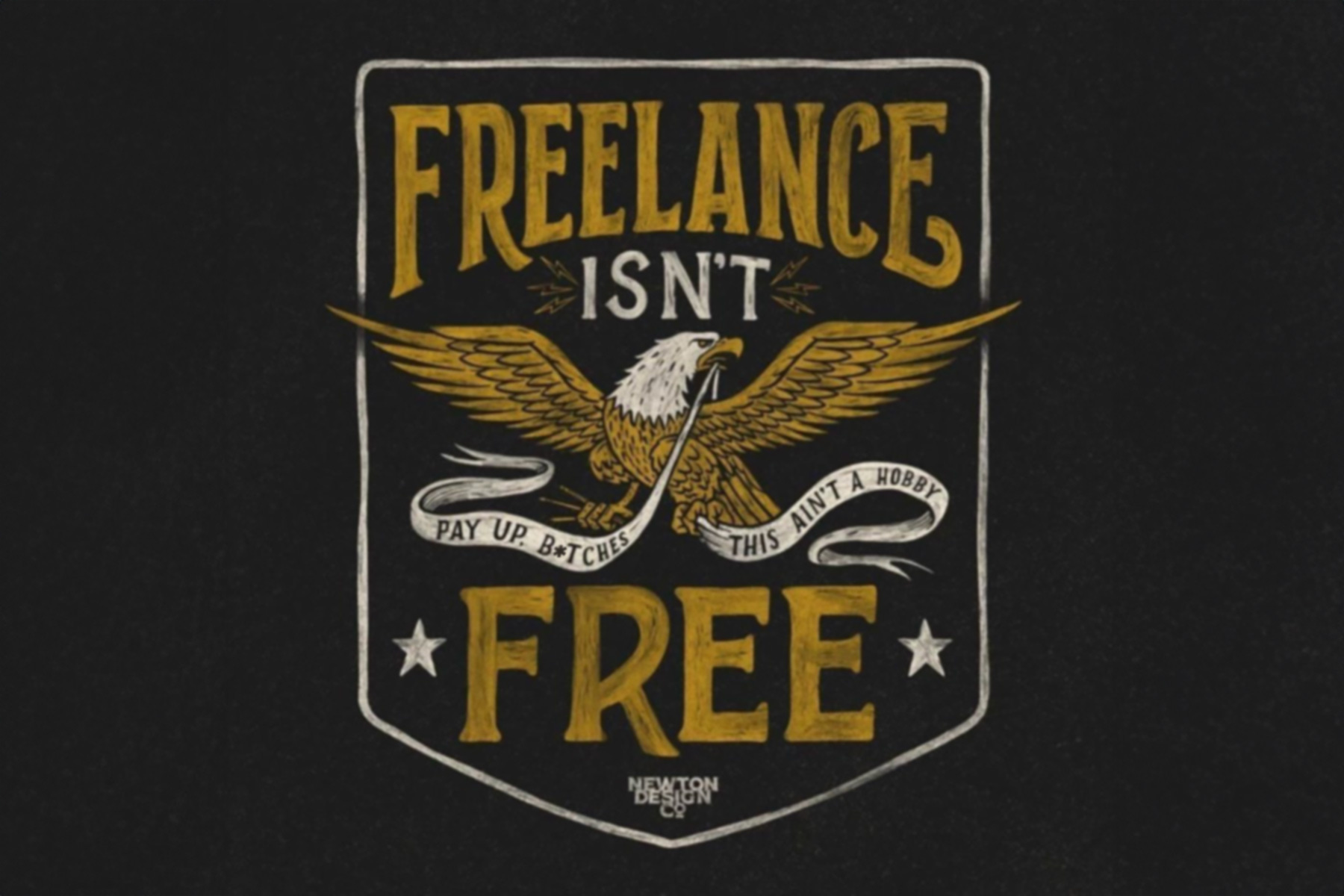
Design by Newton Design Co. (via LogoBucket)
Yesterday morning, I found myself explaining something to my daughter that most people never stop to think about.
There are fundamentally four ways people earn a living:
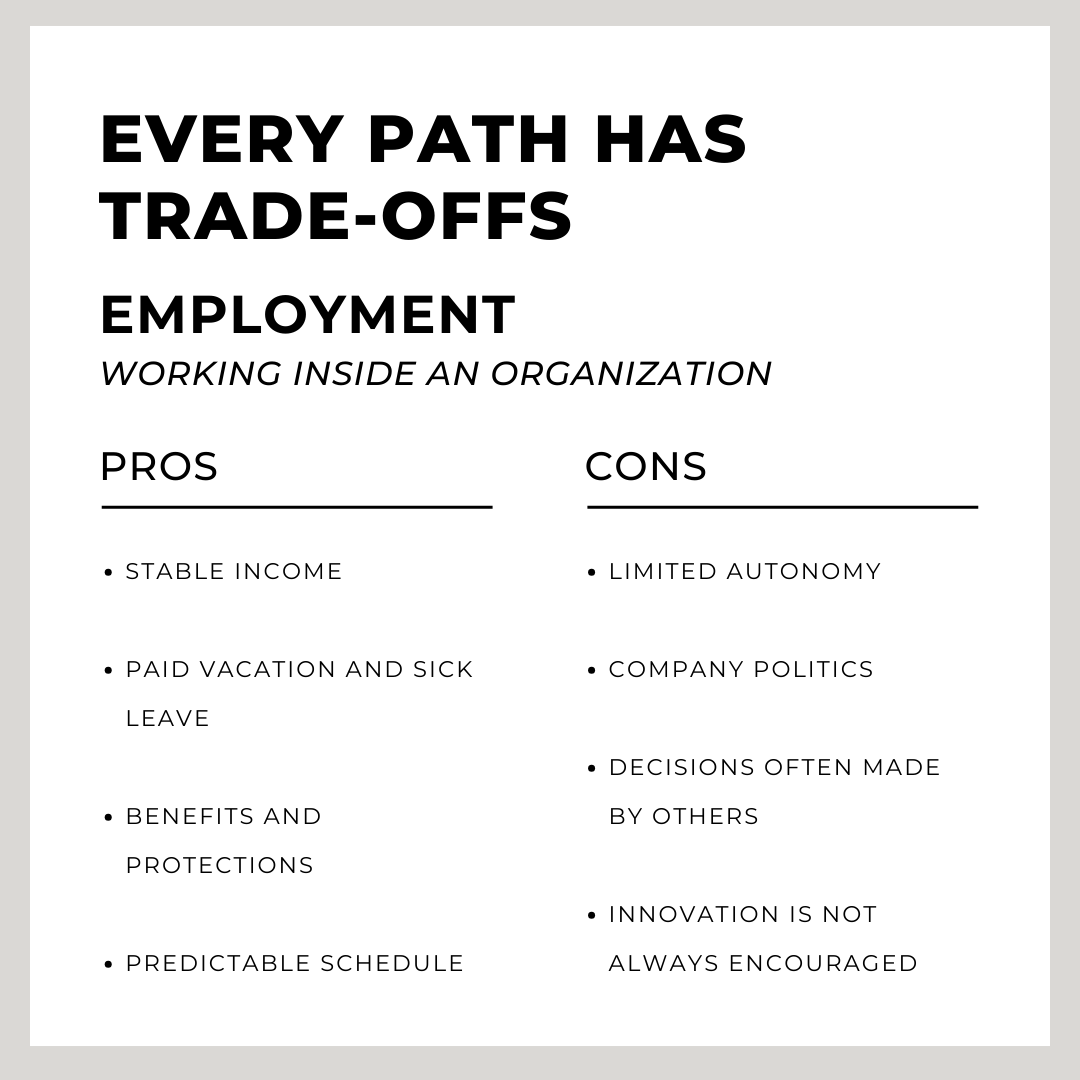
Employment
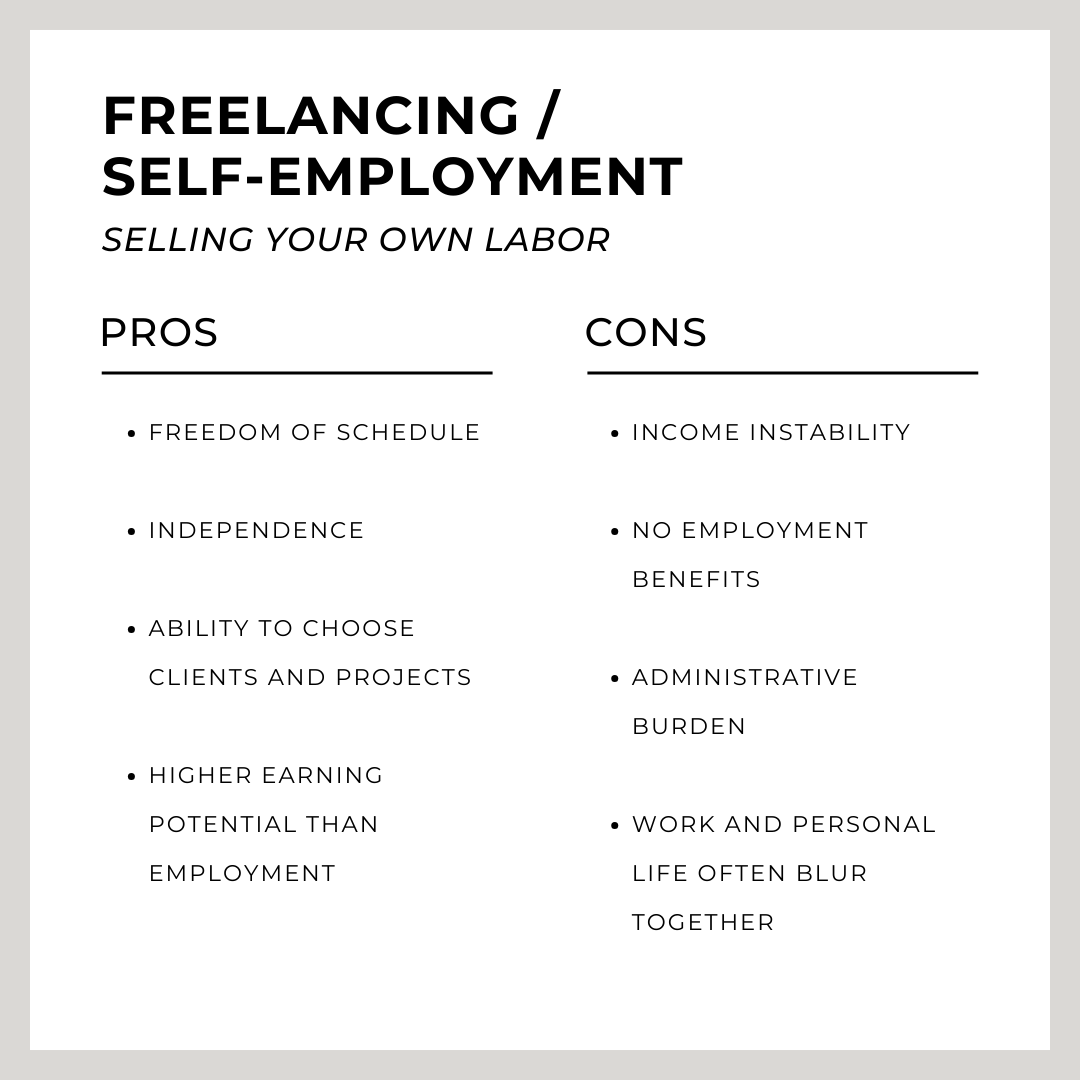
Self-employment
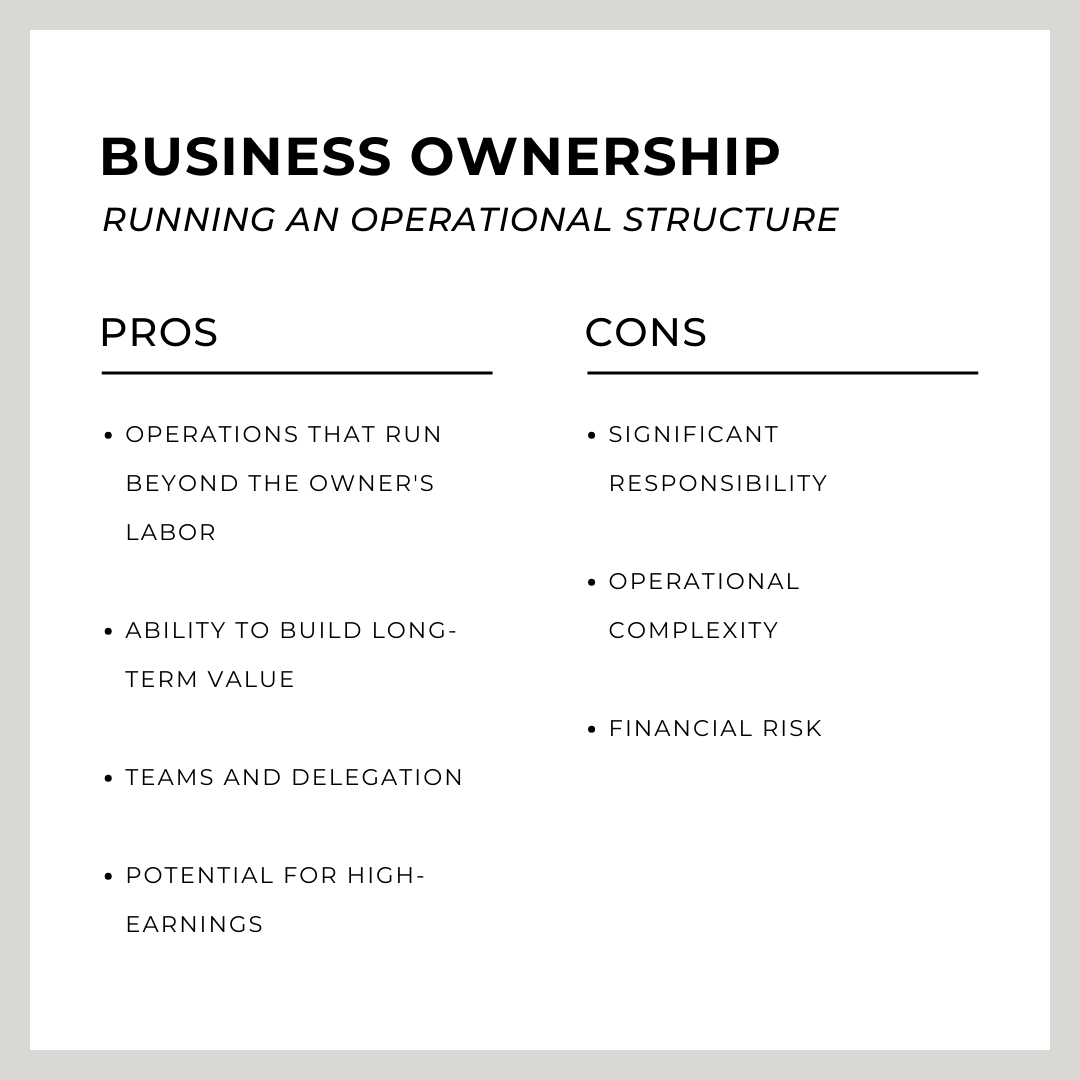
Owning a Business
Entrepreneurship
This idea became popular through Robert Kiyosaki, the author of the well-known book Rich Dad Poor Dad, who introduced the concept of the four income quadrants.
However, the more years I spend working, the more I realize that the real story is more complex. None of these roles is inherently better than the others. They simply attract different personalities, different tolerances for risk, and different ways of thinking.
The Role People Often Forget: The Intrapreneur
My father spent most of his career as an employee, but he was never “just an employee.”
He was Chief Designer at Ford Motor Company and one of the people quietly involved in bringing digital design technology into automotive design in the early 1980s. At the time, computer-aided design was already being used in certain engineering fields, but the creative side of automotive design was still heavily reliant on traditional tools such as clay modeling, drafting boards, and manual processes.
Instead of waiting for permission, he simply worked behind the scenes, moving from department to department and experimenting with ways to integrate emerging digital tools into the design workflow. In other words, he made big things happen when no one was looking.
Over time, those early experiments helped pave the way for the widespread use of digital design systems that are now standard across the automotive industry.
Other companies followed Ford’s footsteps shortly afterward, and the rest is history.
Today, we might call someone like that an intrapreneur: someone who behaves like an entrepreneur within an existing organization, experimenting, innovating, and pushing ideas forward from the inside rather than building something entirely new from scratch.
My father always told me something interesting about himself. He would never be a good entrepreneur.
The reason was not that he lacked bold ideas. Anyone who has ever met the man might chuckle at that suggestion, because if you looked up synonyms for my father, you would probably find the word bold written right next to it. Let’s put it this way: when he enters a room, people notice.
When he leaves, the room suddenly feels empty.
When it comes to business, my father is a finisher and an over-analytical perfectionist. What that really means is that nothing is ever quite perfect enough. That is also one of the reasons employment suits him well, because when hard deadlines do not really exist, nothing ever truly gets completed.
To this day, I swear my mother is a saint. My father’s siblings call her “Santa Kathy,” though being Italian, they pronounce it “Santa Ketty.”
We have lived a life of infinite home improvements since… forever ago.
No hole in any system or judgment — or a slightly crooked wall, for that matter — ever gets past him. He probably would have made a very good lawyer or interrogator as well. As a child, none of my little white lies survived his questioning, and the big ones certainly did not stand a chance.
In many ways, I inherited some of his personality traits, though the instinct to polish things endlessly was never one of them.
Those traits proved extremely valuable to Ford during the many years he worked there. He loves taking ideas, integrating them into systems, refining them, and pushing them to the next level. Personalities like that often thrive inside organizations where ideas already exist but need someone capable of turning them into reality.
Job vs Career
Another thing some people might not think about is the difference between a job and a career.
A job is simply work you do to earn money. A career is a long-term path in which skills deepen, responsibilities grow, and opportunities evolve.
As my own young adulthood proved many times over, those jobs are often temporary. Personally, checking the clock every other minute was not something I could withstand indefinitely.
Yet some people with patience and dedication have used their McJob experiences to step into careers spanning decades. Some people famously took those experiences to unimaginable places. Just look at Jeff Bezos and Jay Leno.
Personally, the only thing I got out of endlessly folding clothes on display tables is that I consciously hang clothes back on the hanger after trying them on, and that those types of jobs are not for me.
Still, there are those who start out as servers in a restaurant chain and eventually become regional managers.
I think the lesson here is that a dead-end job need not remain a dead-end.
Freelancers: The Most Misunderstood Category
For most of my life, I worked as a freelancer.
I recently saw a poster that read “Freelance isn’t free — pay up.” Anyone who has spent time freelancing knows exactly what that means.
Although “freelancer” is a generous description of what I was doing for a while, I would more accurately describe myself as a gig worker, taking on whatever odd jobs came my way: design work, catering, sales, web development, and anything else that appeared. My accountant would look at me each tax season and ask, “What are we saying your business did last year? Catering, fashion design, or web development?”
Freelancing can mean very different things. Some freelancers struggle financially, while others build extremely successful careers and become well-known experts in their field. Architects and therapists are common examples.
However, one thing many people misunderstand is that freelancing is not entrepreneurship.
Freelancers trade their time for money.
Freelancing also comes with a number of hidden realities:
No paid vacation
No sick leave
No guaranteed income
No employment benefits
No company equipment
No consistent schedule
Life is lived as though on a roller coaster. Making long-term financial commitments is extremely risky because it is often a feast-or-famine scenario.
One day, there are infinite amounts of “sure work” ahead in the near future, the next, none of those projects pan out due to unforeseen events.
A freelancer’s time is available on demand, which means the work itself must compensate for the periods when there is no work. Most people who hire them do not take that into consideration and do not understand why rates seem so high.
A freelancer might work five billable hours in a day, but that does not mean the rest of the day is free. Those remaining hours are often fragmented between appointments, administrative tasks, preparation, and time spent looking for the next client.
Sometimes clients cancel at the last minute. Technically, you could bill them, but sometimes maintaining a valuable relationship matters more. Not everyone has luck with finding cooperative, reliable, and honest clients, so it is a good idea to hold on tight to the good ones.
When you care too much about the outcome, it can start to hurt the income.
No pun intended. Well… maybe a little.
Freelancers are deeply attached to their work. They are hands-on, highly invested in the outcome, and often go far beyond what was originally requested because they genuinely care about the result, thereby exceeding the original time estimate by a long shot.
This lifestyle is not for the faint of heart.
So it is natural to question why someone would consciously work under those conditions.
It takes a certain kind of madness to be a freelancer. Those who have lived a life of uncertainty know that freedom is addictive, and it is hard to imagine being in constraining circumstances, even if you benefit from not having to worry as much. You do not need vacation time to escape from life the same way people who only get a couple of weeks out of the year do.
Freelancing feels a lot like gambling. You are always hopeful you will get the next big hit, the next big opportunity. So you move forward with the belief that the next big thing is right around the corner.
For people like me, who are somewhat polymathic, freelancing is one of the few ways to satisfy the many facets of our talents and personalities. There are not many institutions that offer minds like ours the novelty and flexibility they require.
The Entrepreneurial Dream
Freelancing often lives in the same psychological neighborhood as entrepreneurship.
Many freelancers have an entrepreneurial mindset. They see opportunities everywhere, they experiment constantly, and they enjoy building things from scratch. It is not unusual for freelancers to believe they are only one good idea away from becoming entrepreneurs themselves.
For many years, I believed exactly that.
But having ideas is only one part of the equation. As the wise Italian expression goes: Between doing and saying, there is the ocean.
Entrepreneurship also requires something else: the obsession to see one specific idea through, and that obsession is often tied to building a functioning financial engine behind the idea.
I work with several highly successful entrepreneurs, and spending time around them has taught me something interesting about how differently they see the world.
One entrepreneur in my life is constantly starting new ventures. You can mention an idea in passing, and within seconds, he has already decided whether it has potential — or more importantly, whether it could generate massive income.
One week, he might be researching carbon credits and negotiating with the Tanzanian government about managing thousands of kilometers of protected land. The following week, he might be investing in specialty farms that produce luxury eggs for extremely wealthy clients.
The fascinating part is that he does not particularly care about eggs or carbon credits. What he cares about is the market opportunity and the leverage.
Every social event becomes a business conversation. Every vacation becomes an opportunity to meet someone new, shake hands, build relationships, or explore a deal.
He may visit the farms from time to time, but he is not there to hang out with the chickens.
Entrepreneurs like him are not necessarily attached to the product. They are attached to the system that produces value.
I have to admit that I admire that ability. It takes a very particular kind of instinct to spot unobvious opportunities and build ventures wherever the conditions are right.
But there is more than one type of entrepreneur.
Some entrepreneurs are builders over the course of a lifetime. They start something, nurture it, and gradually turn it into an institution that grows alongside a community. Their work becomes part of a larger ecosystem that can continue to flourish long after they are gone.
Henry Ford and Camillo Olivetti are excellent examples of this type of entrepreneur. They both built large, thriving companies that helped shape industries, communities, and the way people lived and worked.
Other entrepreneurs are wired like the one that I mentioned earlier. Their talent lies in constantly spotting opportunities, launching ventures, and moving on to the next one.
Richard Branson would be a classic example of this type.
Personally, if I had my choice, I’d go with the first version of entrepreneurship.
The idea of building something slowly, surrounded by a community, and creating something that could continue to grow long after I am gone — that feels meaningful to me.
Hey, if I’m going to dream, I may as well dream big.
The rapid-fire version of entrepreneurship, where businesses appear and disappear like chess moves on a board, requires a kind of emotional distance from the work that I know I don’t possess. Call me sentimental, I am what I am.
Plus, many good ideas also require resources that are not always easy to access:
funding
networks
partners (and more importantly, partners that are a good fit)
infrastructure
time
Time is a big one. “Time is money.” Time is often eaten up by life’s demands.
Single parenthood — or parenthood in general — does not go hand in hand with free time. No matter how hard you try and how willing you are to sacrifice sleep, life happens, and priorities shift.
And even when people have those resources, success is still far from guaranteed.
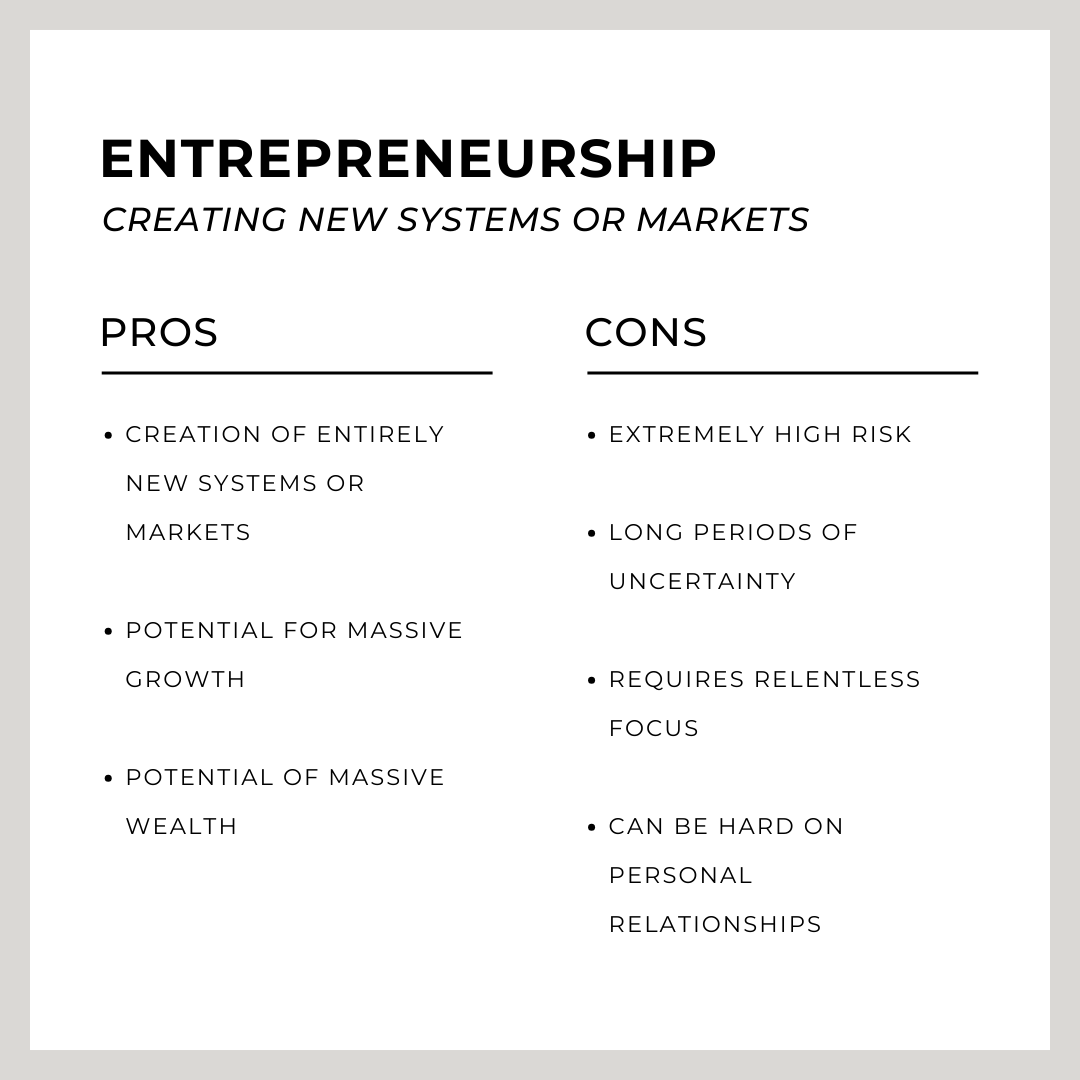
Entrepreneurship demands resilience, tolerance for uncertainty, and the willingness to carry enormous responsibility for long periods of time. Not everyone wants, or can afford, that life.
It’s not a flaw. It’s just life. If it were easy, everyone would do it.
Business Ownership
The category that often gets blurred together with both freelancing and entrepreneurship is business ownership.
From a legal or administrative standpoint, governments tend to classify almost anyone who is not employed as a business owner. The moment you register a company, open a tax position, or operate independently, you are technically running a business.
In that sense, freelancers, consultants, and small operators are often grouped under the same label. Structurally, however, there is an important difference.
While freelancers primarily sell their own labor and their income depends directly on the time and effort they personally invest, business owners operate a structure that can produce value beyond their individual labor.
That means when a business owner is sick or on vacation, the business can still operate.
Think of it this way:
An independent plumber is essentially a freelancer. Someone who owns a plumbing company that sends plumbers out to do the work is a business owner.
A private chef catering events personally is self-employed. Someone who owns a catering company or restaurant with a staff is a business owner.
The history of McDonald’s illustrates how these roles can evolve. When Richard and Maurice McDonald first opened their hamburger stand, they were business owners. When they later developed the Speedee Service System — the operational model that became modern fast food — they stepped into the role of entrepreneurs.
Ray Kroc recognized the larger opportunity. By turning the concept into a franchising system and building a massive real estate structure behind it, he expanded the entrepreneurial vision far beyond the original restaurant.
The people who buy McDonald’s franchises today are not reinventing the system. They are business owners operating within a model that has already been designed.
Know Thyself
Some people thrive with stability. Others thrive with autonomy.
Some people want to build companies. Others want to master a profession.
Many people base their choices on money and identity.
Understanding and accepting who you are, and building your life around that, is a good place to start. It’s honest, and it doesn’t have to be a limitation. It may simply mean spending your life not denying what you need or what’s important to you, and managing your expectations accordingly.
Now, if you’re basing your decisions on something that goes against what feels right to you, that’s an entirely different conversation.
It’s probably the years of me bashing my head against the wall over and over again talking, but one thing is clear: living a life that goes against your own nature is not fun.
It’s easy to dream big about going down fashionable and prestigious roads that promise lots of money.
The real challenge is figuring out which path is aligned with everything that makes you, you — and ultimately happy.